Let’s talk about something that should be simple but often isn’t: representing people with disabilities as they actually live their lives. Not as inspiration porn, not as tragic figures, but as real people doing real things—grabbing groceries, meeting friends for coffee, walking their dogs, playing sports. You know, life.
Why This Matters More Than You Think
When was the last time you saw a billboard or website featuring someone in a wheelchair just… existing? Not overcoming impossible odds, not being “brave,” just shopping for tomatoes or laughing with friends at a restaurant? These moments matter because they tell a truth that media has historically ignored: people with disabilities are out here living full, ordinary, extraordinary lives.
If you’re a content creator, marketer, or brand manager, using authentic imagery that reflects this reality isn’t just the right thing to do—it’s smart business. Your audience notices when you get it right. They also notice when you don’t.
Real Scenes from Real Life
Here’s what genuine representation actually looks like:
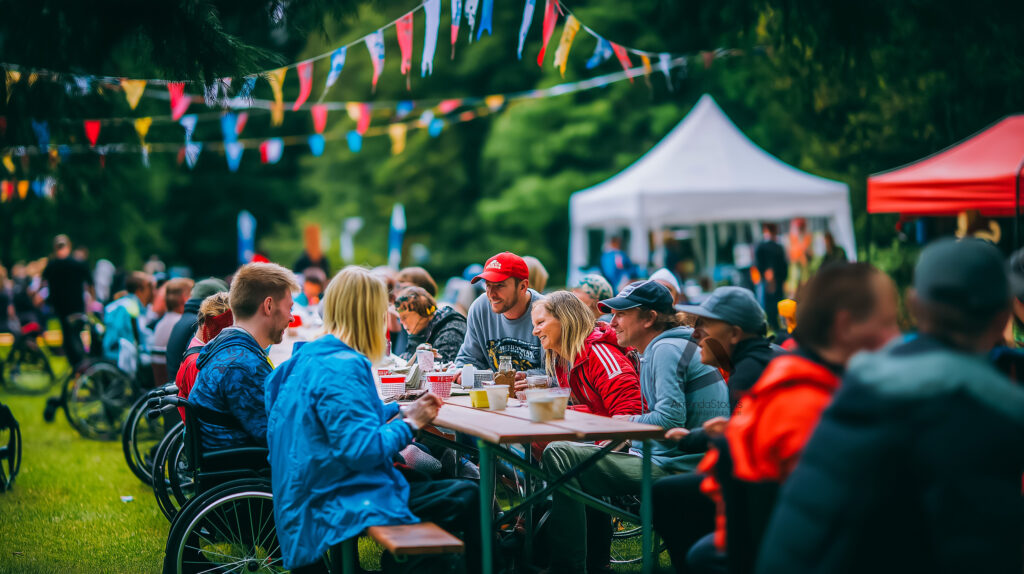
Meeting up with friends. Picture someone using a wheelchair rolling up to their favorite café, ordering their usual, and settling in for hours of conversation and laughter. Or blind friends navigating a bustling restaurant together, service dogs quietly resting beneath the table. These aren’t special occasions—they’re Tuesdays.
Shopping independently. A person with mobility aids comparing prices at the grocery store. Someone with a visual impairment using assistive technology to scan products. A wheelchair user reaching for items, making decisions, living their life without a narrator explaining how “inspiring” it is.
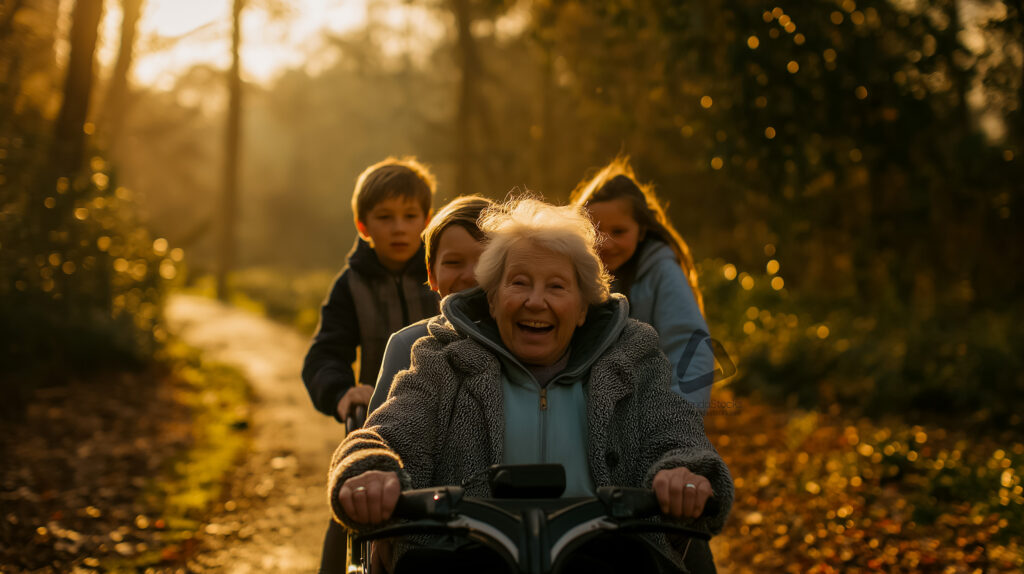
Getting outside. Accessible trails aren’t just nice to have—they’re passports to freedom. Show people with disabilities hiking, exploring parks, breathing fresh air, taking in city views. Bonus points if there’s a guide dog enjoying the scenery too.
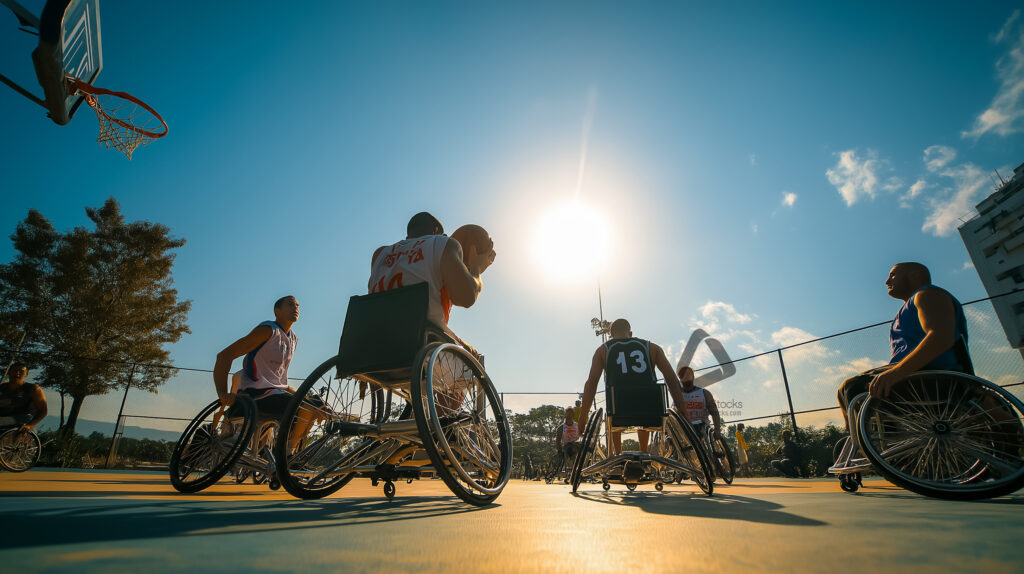
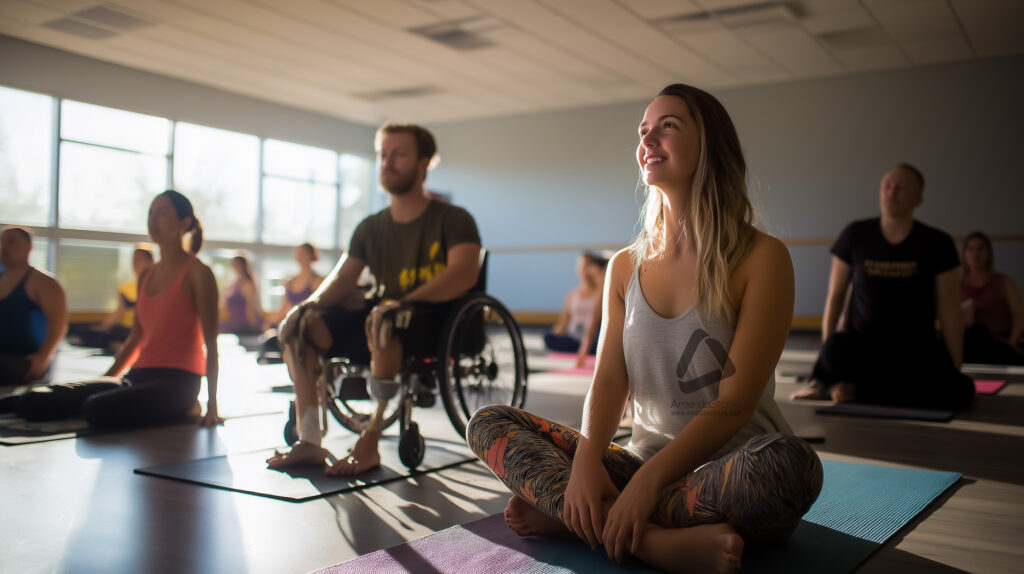
Playing sports. Wheelchair basketball players driving down the court with fierce determination. Adaptive yoga classes where everyone’s finding their own version of the pose. Para-athletes crushing it in community leagues. These images break down assumptions about what’s possible.
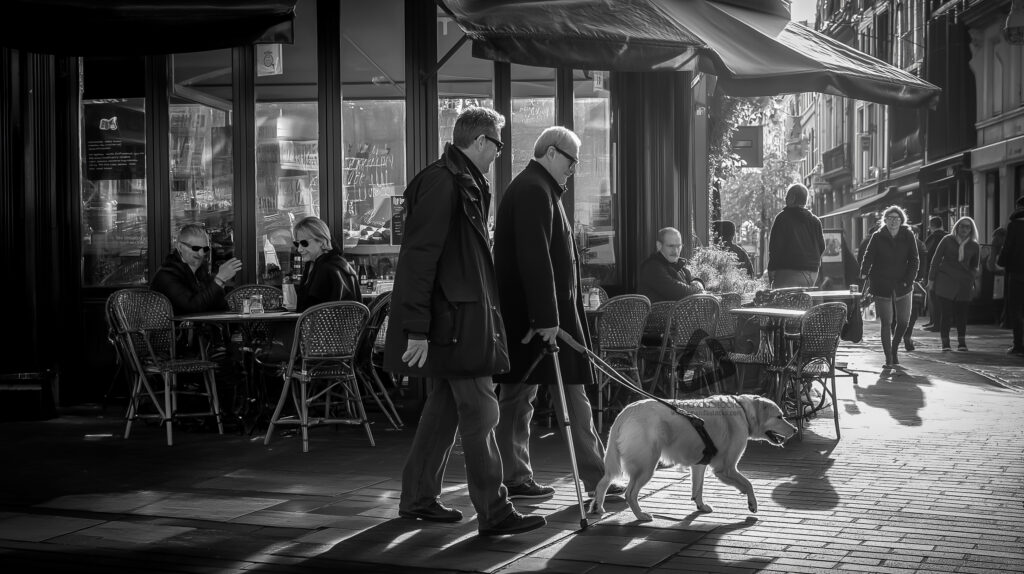
Walking the dog. Sometimes the most powerful representation is the most mundane. A person with a disability walking their dog through the neighborhood, stopping to chat with neighbors, just being part of the community fabric.
Finding Images That Don’t Suck
Here’s the thing about stock photography: there’s a lot of cringe out there. You know the ones—overly staged, dripping with artificial inspiration, or worse, showing disabled people as passive recipients of help rather than active participants in their own lives.
The good news? Platforms like Adobe Stock and Shutterstock have improved dramatically. Search for phrases like “people with disabilities shopping” or “wheelchair user at restaurant” and you’ll find actual good content. But don’t just grab the first image you see—look for:
- Real expressions, not forced smiles
- Natural lighting and settings, not sterile studios
- Independence and agency, not helplessness
- Diversity within disability (different types, ages, ethnicities)
- Accessible environments shown as normal, not exceptional

Making It Work for SEO (Without Being Gross About It)
Yes, you want your content to rank. No, you shouldn’t be weird about it. Here’s how to optimize without losing your soul:
Alt text that matters. Instead of “disabled person,” try “woman in wheelchair selecting fresh vegetables at farmers market.” It’s specific, it’s human, and it helps both search engines and screen readers.
Keywords that feel natural. Work in phrases like “inclusive dining experiences,” “accessible outdoor activities,” or “disabled athletes in community sports” where they actually make sense. If you’re forcing it, readers will feel it.
Content that answers real questions. People search for practical stuff: “wheelchair accessible restaurants near me,” “how to make retail spaces more inclusive,” “adaptive sports programs.” Create content that genuinely helps, and SEO takes care of itself.

The Bigger Picture
Every image you choose sends a message. When you consistently show people with disabilities as active, independent, and integrated into daily life, you’re not just checking a diversity box—you’re helping shift the entire cultural narrative.
That matters to the 1 in 4 adults in the U.S. who live with a disability. It matters to their families, friends, and communities. And honestly? It should matter to everyone, because good representation makes the world a little less lonely and a lot more real.
Where to Go from Here
Next time you’re building a website, creating a campaign, or writing content, pause before you pick your images. Ask yourself: Am I showing disabled people as full human beings? Would someone with a disability see themselves reflected authentically here? Would they roll their eyes at my attempt?
Check out Adobe Stock and Shutterstock—they’ve got solid collections now. Search specifically for everyday scenarios. Update your image library regularly. Pay attention to what disability advocates are saying on social media about representation.
Most importantly, remember that inclusion isn’t a trend or a marketing strategy. It’s just… reality. And the more we show reality as it actually is—messy, diverse, and beautiful—the better our content becomes.
One image at a time, we can change what people see. And what people see, they start to believe. That’s not just good marketing—that’s world-changing.