
The vast expanse of space surrounding our solar system harbors one of the most important yet mysterious protective barriers in the cosmos: the heliosphere. This enormous cosmic bubble serves as Earth’s primary defense against deadly galactic radiation, making life on our planet possible. Now with NASA’s groundbreaking Interstellar Mapping and Acceleration Probe (IMAP) mission, scientists are poised to unlock the secrets of this enigmatic cosmic environment.
What is the Heliosphere? Understanding Our Solar System’s Natural Shield
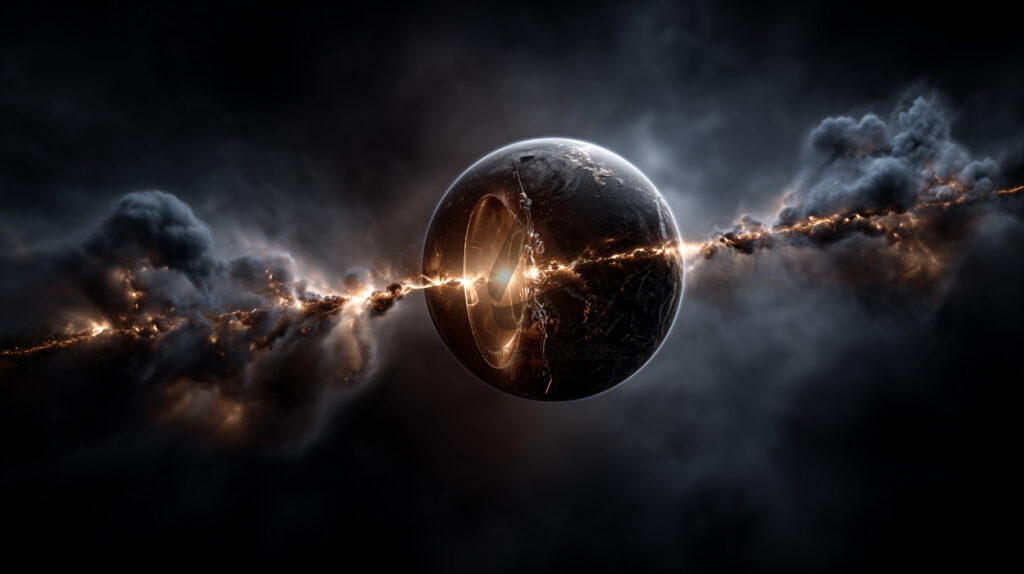
The heliosphere is a massive bubble-like structure that envelops our entire solar system, created by the constant stream of charged particles known as solar wind flowing from the sun. This cosmic shield extends far beyond Pluto’s orbit, beginning at a distance approximately three times greater than the Earth-Pluto distance.
Working alongside Earth’s magnetic field, the heliosphere plays a crucial role in protecting our planet from harmful cosmic radiation that permeates the Milky Way galaxy. Without this natural barrier, the intense cosmic rays would bombard Earth, making life as we know it virtually impossible.
The IMAP Mission: Revolutionary Technology for Space Exploration
Launched aboard a SpaceX Falcon 9 rocket from Kennedy Space Center on September 24, 2025, the IMAP spacecraft represents a quantum leap in heliospheric research. Unlike previous missions that provided limited snapshots of the heliosphere’s boundaries, IMAP’s advanced instruments offer unprecedented capabilities:
- 30 times higher resolution than previous mapping missions
- Real-time solar wind observations from its orbital position 1 million miles from Earth
- 10 sophisticated instruments designed to study the heliosphere’s complex interactions
- Enhanced particle tracking through energetic neutral atoms (ENAs)
How IMAP Will Map the Invisible: The Science Behind the Mission
The key to IMAP’s success lies in its ability to detect and track energetic neutral atoms (ENAs) – uncharged particles formed when energetic ions collide with slow-moving neutral atoms. These particles travel in straight lines allowing IMAP to trace them back to their origins at the heliosphere’s boundaries.
This innovative approach enables scientists to create detailed pictures of the interaction region between our solar system providing insights maintains its protective properties.
Historical Context: From Theory to Reality
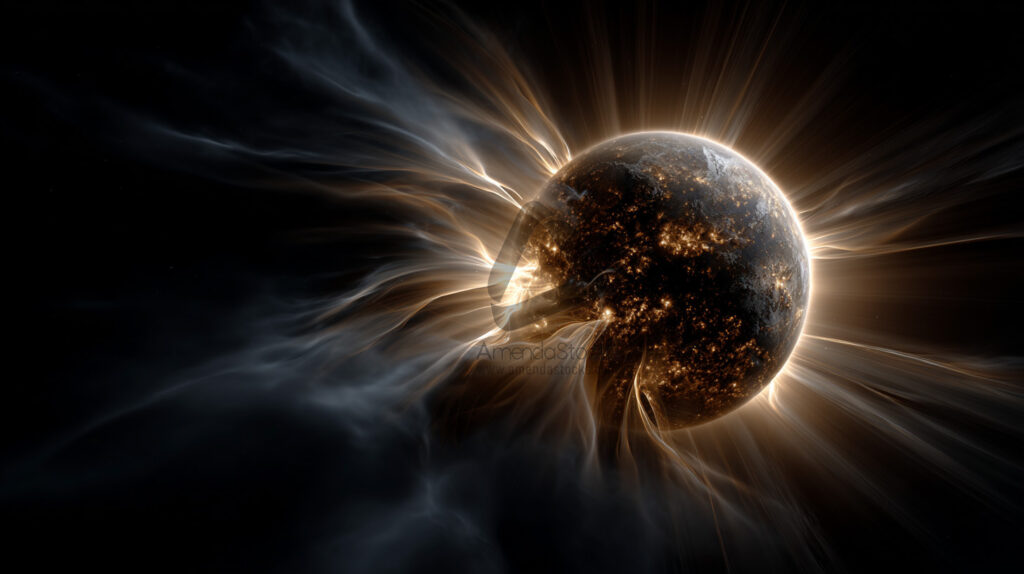
The heliosphere concept emerged in the late 1950s when scientists investigating cosmic rays and solar wind theorized about a magnetic boundary surrounding our solar system. The 1962 Mariner 2 mission to Venus first measured solar wind directly, confirming its existence. Subsequently, the Pioneer missions in the 1970s and the ongoing Voyager probes provided crucial evidence of the heliosphere’s structure.
The Voyager spacecraft remain the only human with Voyager 1 reaching this milestone in 2012 and Voyager 2 following in 2018. Their data revealed the heliosphere’s comet-like shape and provided the first direct measurements from interstellar space.
Space Weather and Planetary Protection
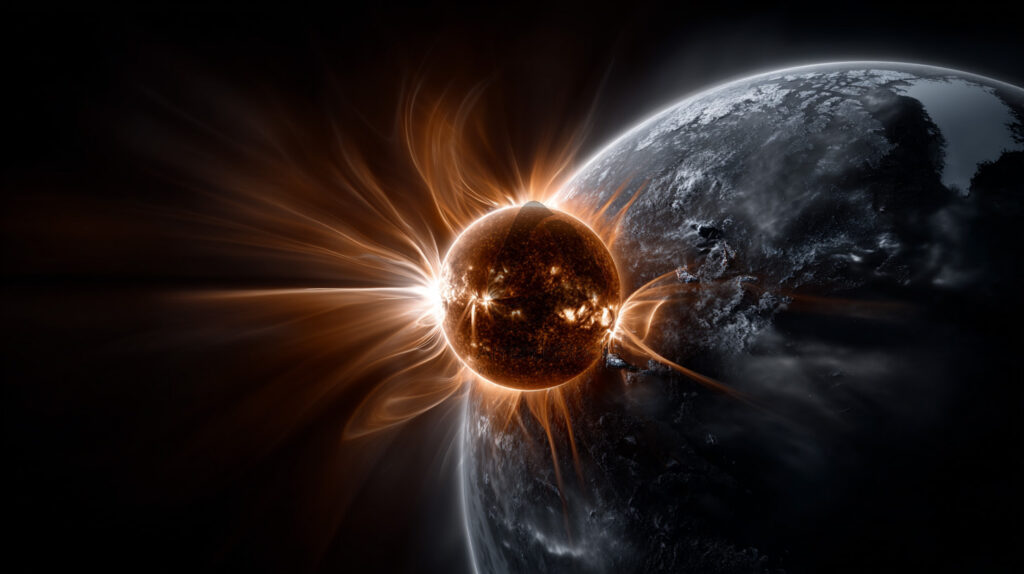
IMAP’s mission extends beyond pure research, offering practical benefits for space weather prediction. The spacecraft launched alongside two companion missions:
Carruthers Geocorona Observatory
Named after Dr. George Carruthers, this satellite will observe Earth’s outermost atmospheric layer, the exosphere, our planet’s atmospheric boundary.
SWFO-L1 Space Weather Monitor
This NOAA satellite serves as an early warning system for solar storms, providing crucial data to protect astronauts and satellites. Its compact coronagraph can deliver solar storm images to prediction centers within 30 minutes hour delays.

Implications for Future Space Exploration
As humanity prepares for deeper space missions, including NASA’s Artemis program returning astronauts to the Moon, understanding space weather becomes increasingly critical. Solar storms can pose severe risks to astronauts and interfere with:
- Satellite communications
- Electric power grids
- Navigation systems
- Radio operations
- International Space Station operations
IMAP’s data will enhance our ability to predict ensuring safer human exploration of the cosmos.

Beyond Our Solar System: Universal Implications
The heliosphere isn’t unique to our solar system. Astronomers have observed similar structures, called astrospheres, around other stars throughout the galaxy. IMAP’s detailed study of our heliosphere will provide insights into how these cosmic shields function universally, potentially informing our understanding of habitability around other stellar systems.
The Future of Heliospheric Research
With IMAP now operational and its companion missions providing complementary data, we stand on the brink of a new era in space science. The mission promises to fill critical gaps in our understanding of how the sun creates solar wind and how our cosmic shield adapts to changing conditions.
As Dr. David McComas, IMAP’s principal investigator, explains, the mission will create incredibly detailed, time-evolving pictures of the heliosphere’s interaction regions but how it works to protect life on Earth.
The mysteries of the heliosphere have captivated scientists for decades. Now, with IMAP leading the charge, humanity is closer than ever to fully understanding this cosmic guardian that makes our existence possible. As we venture further into the solar system and maintaining the technological systems that modern civilization depends upon.