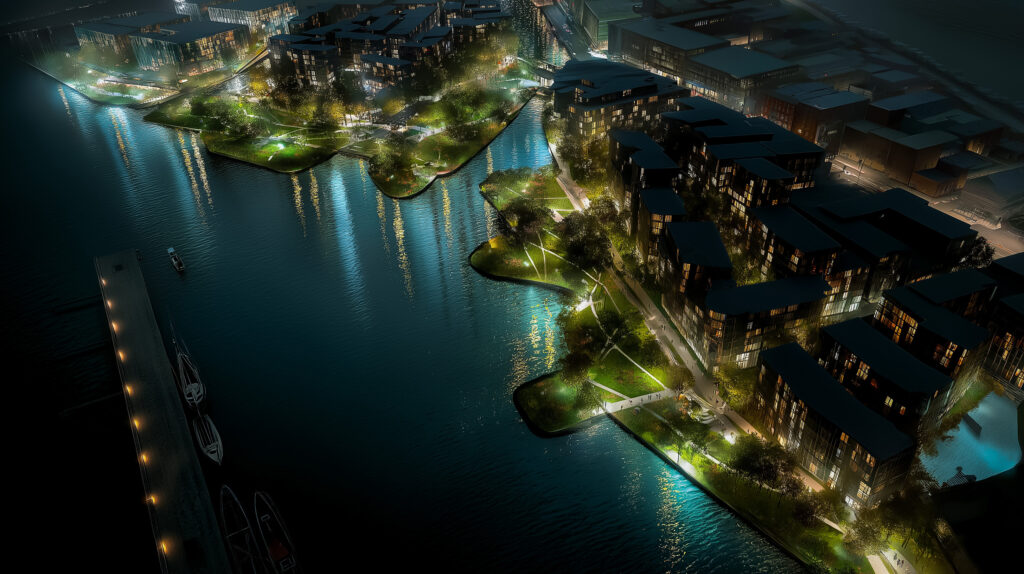
Picture this: it’s 2050, and the way we live, buy, and think about homes has changed in ways we’re only beginning to imagine today. The real estate world isn’t just evolving—it’s being completely reimagined by technology, environmental needs, and how different generations want to live their lives. Let’s see future of real estate 2050.

Homes That Actually Know You
Remember when a “smart home” just meant being able to turn off the lights from your phone? That’s going to seem quaint by 2050. We’re heading toward homes that genuinely understand how you live. Your house will learn that you like it cooler when you’re working from home, warmer in the evenings, and that you prefer natural light in the morning. It’ll adjust itself without you lifting a finger.
This isn’t science fiction—it’s where we’re headed. Artificial intelligence and interconnected devices will work together to make homes feel almost intuitive. For millennials and Gen Z (who’ll be running the show by then), this tech-first approach to living will be the standard, not a luxury. Virtual property tours, blockchain transactions, homes that adapt their layout to your changing needs—it’s all coming.

Cities Are Getting Bigger and Smarter
Here’s a striking fact: by 2050, two out of every three people on Earth will call a city home. That’s a lot of people needing places to live, work, and enjoy life. Cities won’t just grow outward—they’ll grow upward and smarter. We’ll see more mixed-use buildings where you can live, work, shop, and socialize without traveling far.
The construction industry is already changing to meet this demand. Modular buildings and advanced prefabrication techniques mean we can build faster and more efficiently. But here’s the catch: with all these people packed in, we’ll need to be creative about maintaining green spaces and quality of life. Nobody wants to live in a concrete jungle, no matter how technologically advanced it is.
Green Isn’t Just Nice to Have Anymore
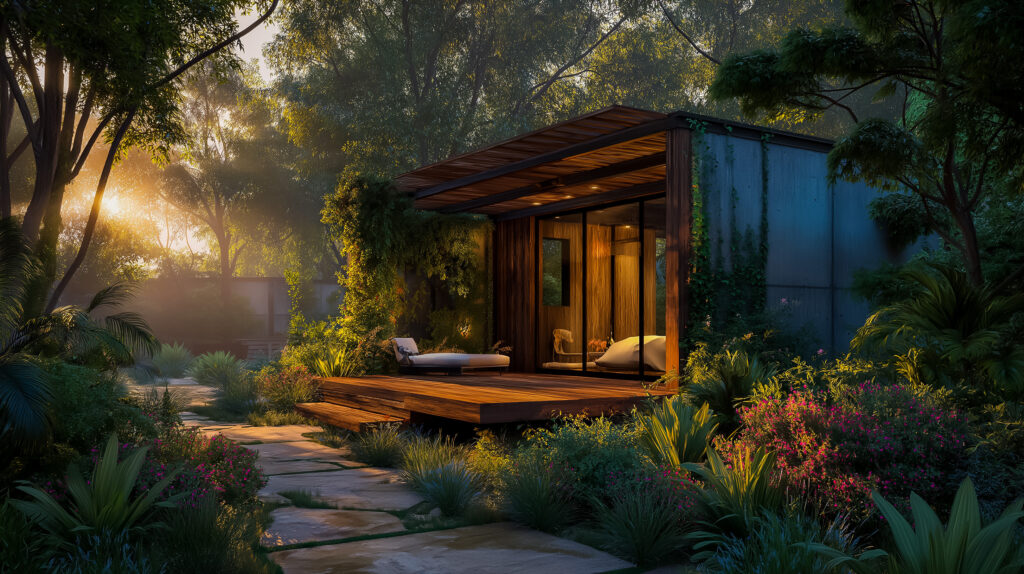
Let’s be honest—the planet’s sending us some pretty urgent messages. By 2050, building sustainably won’t be a selling point; it’ll be the baseline. Energy-efficient materials, solar panels, smart water systems, and buildings that recycle their own materials during renovation—these will all be standard features.
And it’s not just about doing the right thing (though that matters). Younger generations are making it clear: they want climate-resilient, eco-friendly homes, and they’re willing to vote with their wallets. Properties that ignore sustainability? They’re going to struggle. Smart buildings that actively manage their energy use and minimize waste? Those will hold their value and then some.
Families Are Changing, Homes Need to Keep Up
Here’s something interesting: multi-generational living is making a comeback. By mid-century, it’ll be increasingly common to find grandparents, parents, and kids all under one roof. Sometimes it’s about culture, sometimes it’s economics, sometimes it’s about caring for aging relatives—often it’s all three.
This means homes need to be more flexible. We’re talking about floor plans that give everyone privacy while keeping the family connected, accessibility features that don’t scream “institutional,” and technology that helps with everything from medication reminders to video calls with distant relatives.
Meanwhile, the world’s getting older. People are living longer, which means homes need to think about healthcare integration, age-friendly design, and proximity to medical services. But don’t forget about the younger crowd—they want adaptable spaces, cool amenities, and seamless tech. Designing for both isn’t easy, but it’s necessary.
The Business Side Is Evolving Too
Real estate agents and brokers in 2050 won’t just be salespeople—they’ll be tech advisors, sustainability consultants, and strategic guides. Buying or selling a home will involve understanding smart home systems, evaluating green certifications, and navigating digital transactions. The professionals who thrive will be the ones who can speak both the language of real estate and the language of technology.
Companies embracing PropTech (property technology) will have a massive advantage. We’re talking about better property discovery, personalized recommendations, and ongoing support that extends far beyond closing day. The old-school way of doing things? It’s not going to cut it.

The Big Question: Too Many Homes?
Here’s a curveball: some experts think we might actually face an oversupply of housing in certain markets by 2050. Sounds crazy when today’s headlines are all about housing shortages, right? But as older buildings age and leaseholds expire, and as new construction catches up with demand, we could see property prices stabilize or even drop in some areas.
What does this mean? Property owners and investors will need to be strategic. Data analytics, smart renovations, and adaptive reuse of buildings will be crucial. You can’t just sit back and expect your property to appreciate anymore—you’ll need to actively maintain its relevance in the market.

The Bottom Line
As we look toward 2050, one thing’s clear: real estate is entering an era of unprecedented change. The winners won’t be the biggest players or those with the most resources—they’ll be the ones who see these changes coming and adapt quickly.
Technology will make homes smarter and more personalized. Sustainability will shift from optional to essential. Urban planning will need to balance density with livability. Demographics will demand flexibility. And business models will need to evolve or die.
It sounds like a lot, and honestly, it is. But it’s also exciting. We’re not just building houses—we’re creating the environments where the next generations will live, work, love, and grow. The professionals, investors, and developers who understand this won’t just survive the transition to 2050—they’ll help shape what that future looks like.
The question isn’t whether real estate will change by 2050. It’s whether we’re ready to change with it.