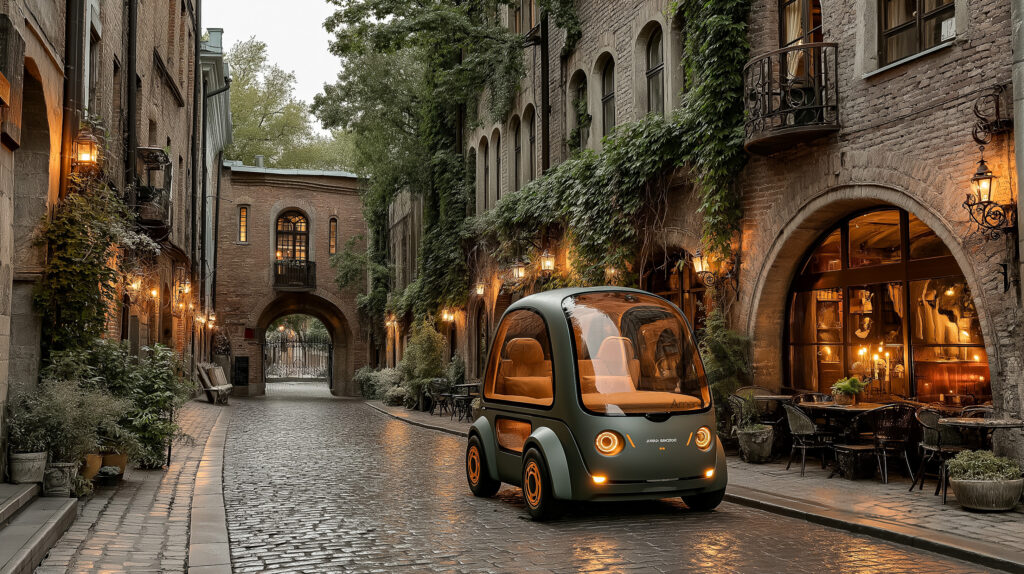
Picture this: it’s 2050, and the morning commute looks nothing like it does today. You step into your car, settle into a comfortable seat, and tell it where you want to go. Then you pull out your laptop or simply close your eyes for a quick nap while your vehicle smoothly navigates through traffic, chatting with other cars and traffic lights along the way. Sound like science fiction? Maybe not for much longer. Lets see the future of cars 2050.

The Electric Revolution
Let’s be honest—gas stations might become as rare as phone booths by mid-century. Electric vehicles aren’t just a trendy alternative anymore; they’re quickly becoming the default choice. The technology has come a long way from those early EVs that could barely make it across town without needing a charge.
Thanks to major improvements in battery technology, future electric cars will zip along for hundreds of miles before needing to plug in. And when they do need a charge? Ultra-fast charging stations will be everywhere—woven into city streets and dotting highways like today’s gas stations. The whole process will be quick, convenient, and powered by clean, renewable energy.
Companies are getting creative too. Take Renault’s Float concept, for instance—imagine modular electric pods that glide through city streets on magnetic systems, producing zero emissions and barely making a sound. It’s the kind of innovation that could genuinely transform how cities move and breathe.
Your Car Becomes Your Chauffeur
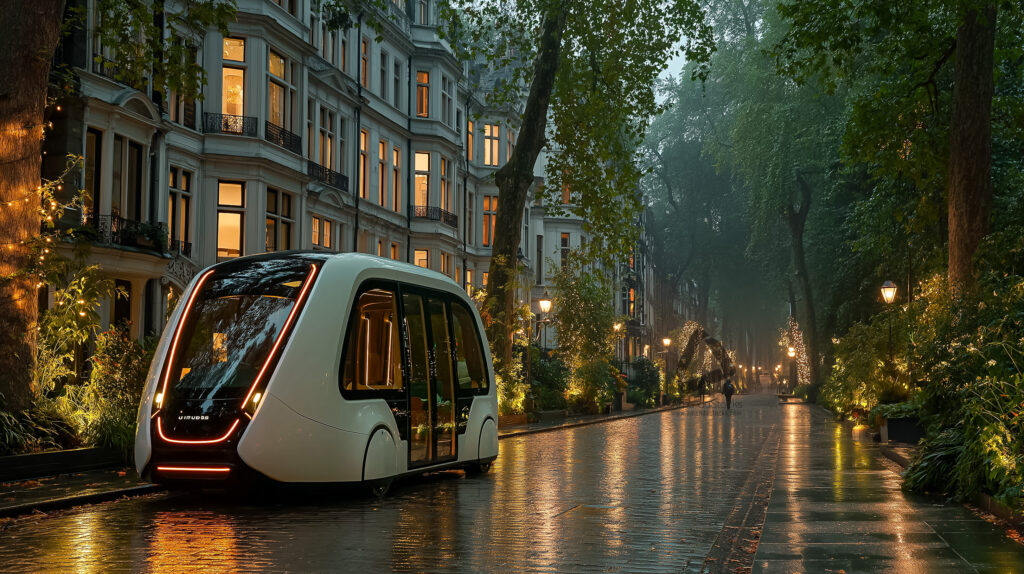
Here’s where things get really interesting. By 2050, most new cars will drive themselves—and we’re not talking about basic lane-keeping here. We’re talking full autonomy: sophisticated AI systems combining cameras, radar, and LiDAR sensors that can navigate rush-hour traffic, construction zones, and everything in between better than any human driver could.
What does this mean for you? Well, that time you currently spend gripping the steering wheel and watching the road? You’ll get it back. Work on a presentation, video call with friends, read a book, or just zone out and enjoy the ride. Your car will handle the stress while you do whatever you want.
These vehicles will be constantly connected to the world around them—talking to traffic systems, accessing real-time maps in the cloud, and adjusting their routes on the fly to avoid delays. They’ll even learn your preferences over time, adapting their driving style to your comfort level and predicting when they need maintenance before anything goes wrong.

Living Rooms on Wheels
Future cars won’t just transport you—they’ll become genuine extensions of your living space. Forget the traditional dashboard; think holographic displays, interactive 3D screens, and cabins that reconfigure themselves based on what you need at any given moment.
These smart vehicles will sync with your phone, your smartwatch, your home—basically everything in your digital life. They’ll communicate with other cars to prevent accidents and coordinate with city infrastructure to find the fastest route or the nearest parking spot.
Inside? It’ll feel more like a high-tech lounge than a vehicle. Immersive entertainment systems for movie watching, augmented reality navigation that makes every trip feel like an adventure, and sensors that monitor your health and even your mood. Feeling stressed? Your car might adjust the lighting, play calming music, and cool down the temperature without you asking. It’ll know.

Two Different Roads: America vs. Europe
While electric and self-driving cars will take over globally, the way they look and function will vary quite a bit depending on where you are.
In the United States, expect big, spacious vehicles—think mobile offices and living rooms combined. America’s love affair with large cars isn’t going anywhere, and with the country’s wide-open spaces and long distances between cities, these roomy autonomous vehicles will be perfect. Less restrictive regulations will also mean faster adoption of cutting-edge autonomous features. Imagine cross-country road trips where your car doubles as a bedroom, complete with sleeping quarters and workstations.
Europe, on the other hand, will lean toward compact, efficient designs built for crowded city centers. Stricter safety regulations and a cultural preference for shared transportation will shape European vehicles differently. Car-sharing will be huge, with smaller autonomous pods seamlessly integrating with public transit systems. The focus will be on sustainability, efficiency, and getting the maximum number of people around cities with minimal environmental impact.

Getting Wild: Flying Cars and Modular Transport
Some concepts sound straight out of a sci-fi movie, but they’re closer to reality than you might think. Companies like Airbus are developing modular systems like the Pop.Up—imagine booking a ride through an app, and having an AI decide whether you should travel by road or air depending on traffic. In congested cities, your pod could literally detach from its wheels and be lifted by a drone to your destination. Seamless, multimodal, and completely autonomous.
Luxury brands aren’t sitting out either. Rolls-Royce’s Vision Next 100 concept combines old-school craftsmanship with bleeding-edge tech—electric powertrains, smart interiors that anticipate your needs, and zero-touch controls for the ultimate refined experience.
And yes, flying cars are actually in development. The AeroMobil and Terrafugia TF-X are real projects aiming to bring vertical takeoff and hybrid-powered flight to everyday transportation. It’s still early days, but the dream of lifting off from traffic jams might not be so far-fetched after all.

Behind the Scenes: The Tech Challenge
Of course, building all this futuristic tech isn’t simple. Automotive suppliers and manufacturers face enormous challenges. Creating reliable, miniaturized electronics that can handle the constant data demands of these connected, autonomous vehicles requires serious innovation.
Future factories will be highly automated, with advanced robots assembling the complex electrical and digital systems that make these cars work. Every component will need to be traceable, reliable, and capable of lasting for years of heavy use. It’s a massive undertaking, but the industry is rising to meet it.

The Road Ahead
By 2050, the car as we know it today will have evolved into something fundamentally different. Electric powertrains will be standard. Autonomous driving will be the norm. And every vehicle will be a connected node in a vast digital network spanning entire cities and countries.
Regional differences will certainly exist—Americans in their spacious road-trippers, Europeans in their efficient urban pods—but everywhere, the focus will be the same: sustainability, safety, connectivity, and making the journey itself as enjoyable as the destination.
We’re standing at the edge of the biggest transformation in personal transportation since Henry Ford rolled the first Model T off the assembly line. It’s a future that promises less stress, more freedom, cleaner air, and smarter cities. And honestly? It can’t come soon enough.