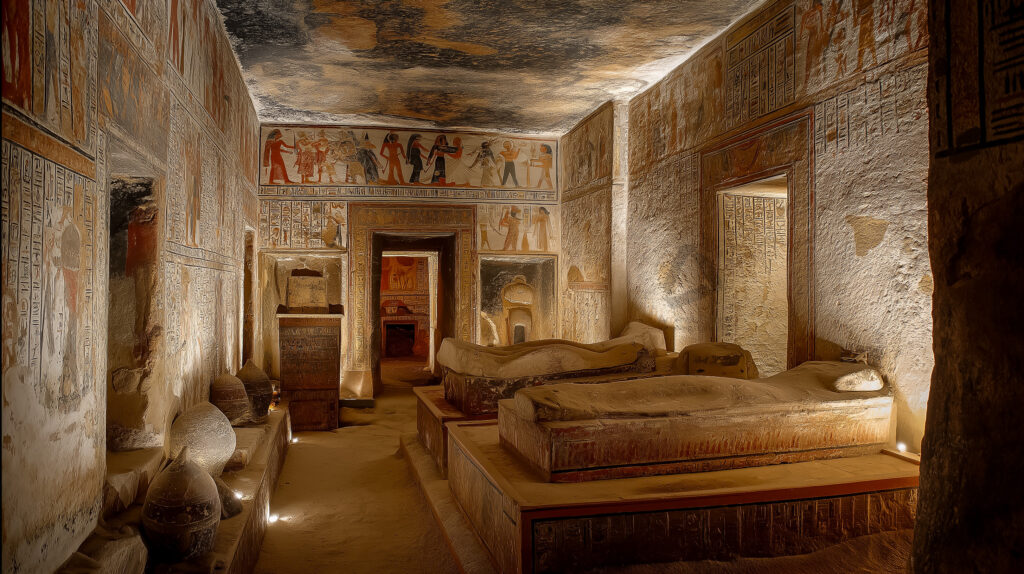
Picture a Ancient Egypt civilization so remarkable that it lasted longer than the time separating us from the fall of Rome. That’s Ancient Egypt—a society that thrived along the Nile River for over three thousand years, from around 3100 BCE until 30 BCE. Even today, thousands of years later, we’re still captivated by their pyramids, their pharaohs, and the mysteries they left behind.
Where It All Began
Long before the pyramids pierced the desert sky, small groups of people were figuring out how to survive along the Nile. These weren’t the grand pharaohs we imagine—they were hunter-gatherers slowly learning to farm and settle down. By around 5500 BCE, communities like the Badarian and Naqada cultures were making beautiful pottery, crafting copper tools, and adorning themselves with jewelry. They traded with neighbors in Nubia, ventured into desert oases, and connected with people as far as the Levant.
These early Egyptians had an artistic streak too. They created stunning cosmetic palettes and decorated their pottery with intricate designs. When they buried their dead, they did so with care and ritual. Then, around 3150 BCE, something pivotal happened. A leader named Narmer (some call him Menes) managed to unite Upper and Lower Egypt into one kingdom. The famous Narmer Palette, carved in stone, tells this story of unification—and with it, Ancient Egypt as we know it was born.
The Pharaoh: More Than Just a King
What made Egypt so stable for so long? A big part of the answer lies in how they viewed their rulers. The Pharaoh wasn’t just a king—he was considered a living god, a bridge between the divine and the everyday world. His job was to maintain Ma’at, which you could think of as cosmic order, truth, and justice all rolled into one. No pressure, right?
But the Pharaoh couldn’t do it alone. Over time, Egypt developed a sophisticated government with administrators, officials, and scribes who kept things running smoothly. These weren’t just royal relatives getting cushy jobs—by the Fifth Dynasty, people were chosen for their skills and abilities. It was still a rigid society, make no mistake, but there was some room for talent to rise.
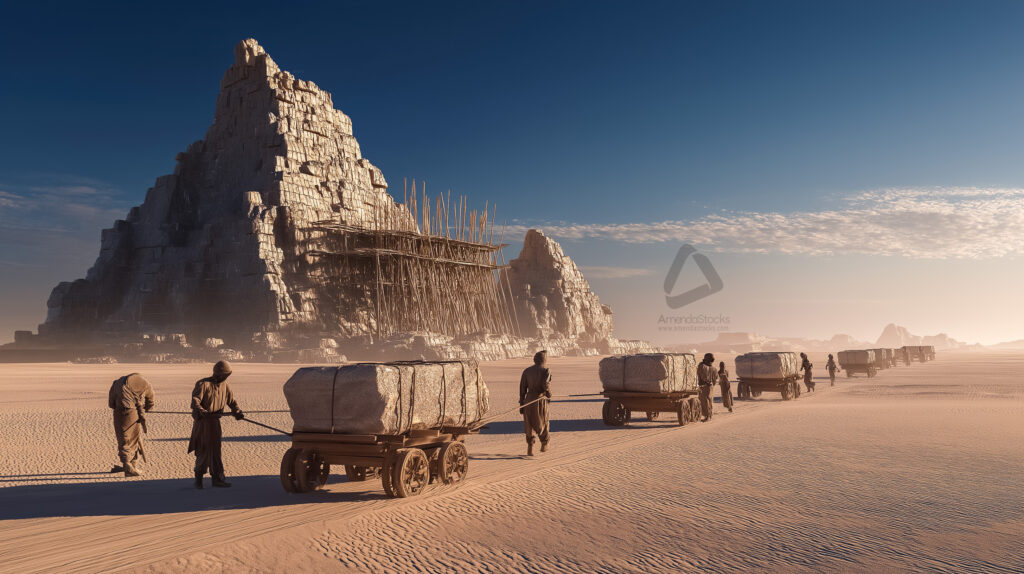
Egyptian society had clear layers. At the top were the pharaohs and royal family. Below them came priests and high officials, then scribes (who had the power of literacy), followed by craftsmen, farmers, and laborers. The temples and the state controlled most of the wealth, land, and resources. Farmers worked the fields and handed over their harvests to state granaries or temple storehouses. It was this organized system that made possible the construction of massive pyramids and temples that still stand today.

The Power of Words and Images
Around 3000 BCE, the Egyptians invented one of history’s most beautiful writing systems: hieroglyphs. Those elegant symbols—birds, eyes, hands, wavy lines—covered everything from temple walls to tomb chambers. For everyday use, scribes developed hieratic script, a faster, more cursive version.
Being a scribe was a big deal. In a society where most people couldn’t read or write, scribes held immense power. They recorded everything: tax records, legal documents, religious texts, and royal decrees. Their skill with words quite literally ran the country.
Egyptian art followed strict rules, but that doesn’t mean it wasn’t breathtaking. The pyramids of Giza—especially the Great Pyramid—weren’t just tombs; they were statements carved in stone about power, religion, and the afterlife. Artists painted vivid scenes on tomb walls showing daily life, religious ceremonies, and journeys to the underworld. Their style was distinctive: figures shown in profile with shoulders facing forward, everyone depicted in their prime, pharaohs larger than everyone else. It was idealized, hierarchical art that reflected how they saw the world—or at least, how they wanted to see it.

Daily Life in the Land of the Nile
For most Egyptians, life revolved around the Nile’s rhythm. Every year, the river flooded, depositing rich, dark soil perfect for growing crops. Farmers planted wheat and barley, tended vegetable gardens, and raised livestock. The surplus from these harvests fed not just families but funded the entire civilization—its temples, armies, and monuments.
Religion wasn’t separate from daily life; it was woven into everything. Egyptians worshipped dozens of gods, each with their own personalities, stories, and responsibilities. Ra sailed across the sky each day. Osiris ruled the underworld. Isis worked her magic. The pharaoh performed rituals to keep the gods happy and Ma’at intact, but ordinary people also prayed, made offerings, and wore protective amulets.
Interestingly, Egyptian women had more rights than women in many other ancient civilizations. They could own property, run businesses, sign contracts, and take legal action. That’s not to say Egypt was egalitarian—it wasn’t—but women had a degree of independence that would have seemed radical elsewhere in the ancient world.
Family life mattered enormously. Children played with toys, celebrated coming-of-age rituals, and learned trades from their parents. People cared about personal hygiene (they loved to bathe), wore makeup (both men and women lined their eyes with kohl), and enjoyed music, games, and good food. Skilled craftsmen created gorgeous works in faience, glass, and precious metals. Life wasn’t perfect, but Egyptian culture valued beauty, order, and community.
Ups and Downs Over Three Millennia
Three thousand years is a long time, and Egypt’s history had its share of golden ages and dark periods. The Old Kingdom gave us the pyramids. The Middle Kingdom brought literary and artistic refinement. The New Kingdom saw Egypt reach its greatest territorial extent and forge international alliances—including history’s first recorded peace treaty with the Hittites.
But there were also intermediate periods when the country fractured, central authority collapsed, and rival kingdoms emerged. Foreign invaders came and went: the Hyksos, Libyans, Kushites, Assyrians, Persians, Greeks, and finally Romans. Each left their mark. The Ptolemies, descended from one of Alexander the Great’s generals, blended Greek and Egyptian traditions. When Cleopatra died in 30 BCE, Egypt became a Roman province, though Egyptian culture persisted for centuries more, finally fading after the Arab conquest in 642 AD.

Why We Still Care
Our modern obsession with Ancient Egypt really took off in the early 1800s when Napoleon brought scientists and scholars on his military campaign. The discovery of the Rosetta Stone—a single slab carved with the same text in three scripts—finally gave us the key to reading hieroglyphs. Suddenly, the voices of ancient Egyptians could be heard again after millennia of silence.
What did they give us? More than we can easily measure. They pioneered techniques in architecture, mathematics, and medicine. They created literature that still resonates. They left behind temples, tombs, statues, and texts that continue to amaze us with their beauty and ambition.
But perhaps most importantly, they showed us what human beings can achieve when they work together toward something greater than themselves. For over three thousand years, generation after generation of Egyptians woke up to the same Nile, worshipped the same gods, and contributed to a civilization that believed in order, in the afterlife, and in leaving something permanent behind.
Standing before the Sphinx or walking through the Valley of the Kings, you can’t help but feel a connection to those ancient people. They lived and died, loved and fought, dreamed and built. And somehow, impossibly, their world still speaks to ours.