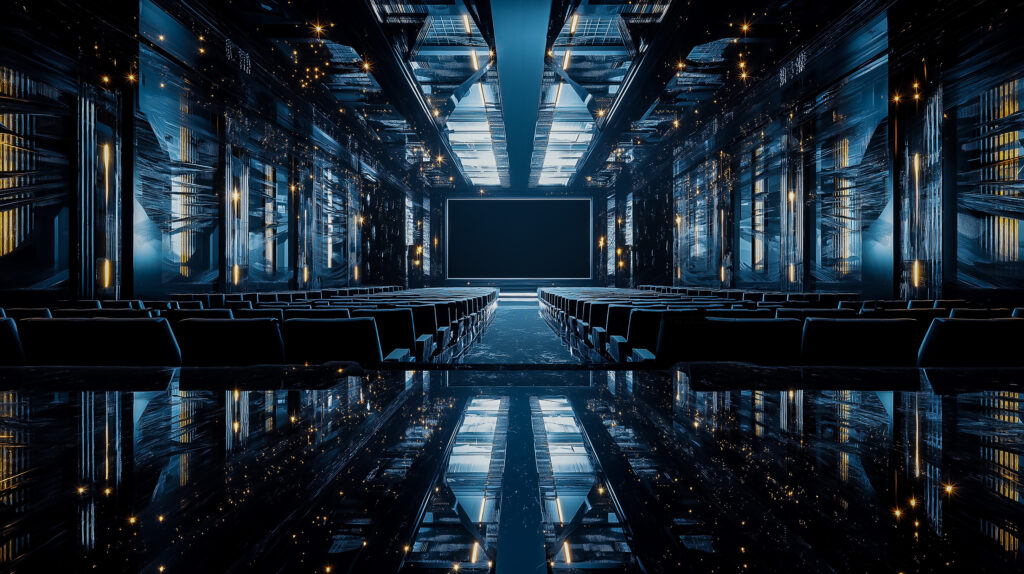
Picture this: it’s 2050, and the movie industry looks nothing like it does today. We’re talking about a world where artificial intelligence, virtual sets, and immersive tech like AR and VR have completely changed the game. It’s not just about watching films anymore—it’s about stepping inside them, shaping them, and experiencing stories in ways we can barely imagine the future of filmmaking right now.

When AI Becomes Your Creative Partner
Let’s start with artificial intelligence. By 2050, AI won’t just be some fancy tool sitting in the background—it’ll be right there in the creative process, helping filmmakers bring their visions to life faster and more efficiently than ever before.
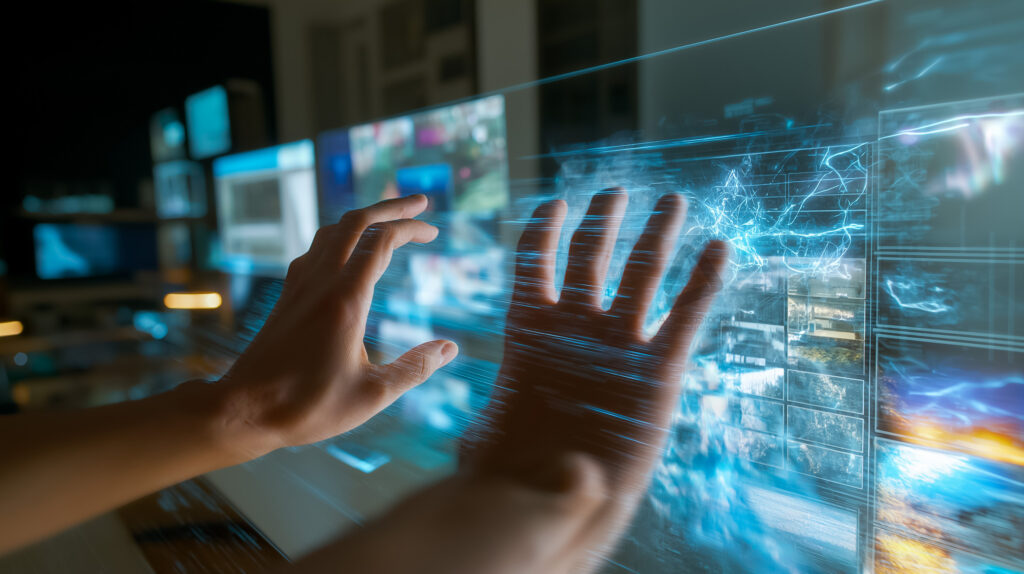
Think about how directors work today. They sketch out scenes, write treatments, go through countless revisions. In the future, they’ll be able to describe what they want and watch AI generate visual mockups in seconds. Want to see how a chase scene looks with different lighting or camera angles? AI can show you multiple versions before you even step on set.
Writers won’t be replaced, but they’ll have a powerful assistant. They can test different plot twists, experiment with character arcs, and see which versions resonate best with test audiences—all before final scripts are locked. Post-production will be transformed too, with AI handling the heavy lifting on editing, color correction, visual effects, and sound design. This doesn’t mean human editors are obsolete; it means they can focus on the artistry while AI takes care of the tedious technical work.

Saying Goodbye to Green Screens
Remember those awkward green screen shots where actors pretend to react to creatures that aren’t there? By 2050, that’ll be ancient history. Virtual production is already gaining ground today, and in a few decades, it’ll be the standard.
Imagine massive LED walls surrounding a soundstage, displaying photorealistic environments that change in real-time. Actors can see the world they’re in, react naturally to their surroundings, and directors can adjust everything on the fly—change the time of day, swap locations, tweak the lighting—all without leaving the studio.
Directors will even be able to “scout” locations using VR headsets, walking through completely digital sets, planning their shots, and figuring out lighting before anything physical is built. This technology won’t just be for big-budget blockbusters either. As costs come down, indie filmmakers will have access to the same tools, creating stunning visuals that would’ve cost millions just a few years earlier.
Stories You Can Step Into
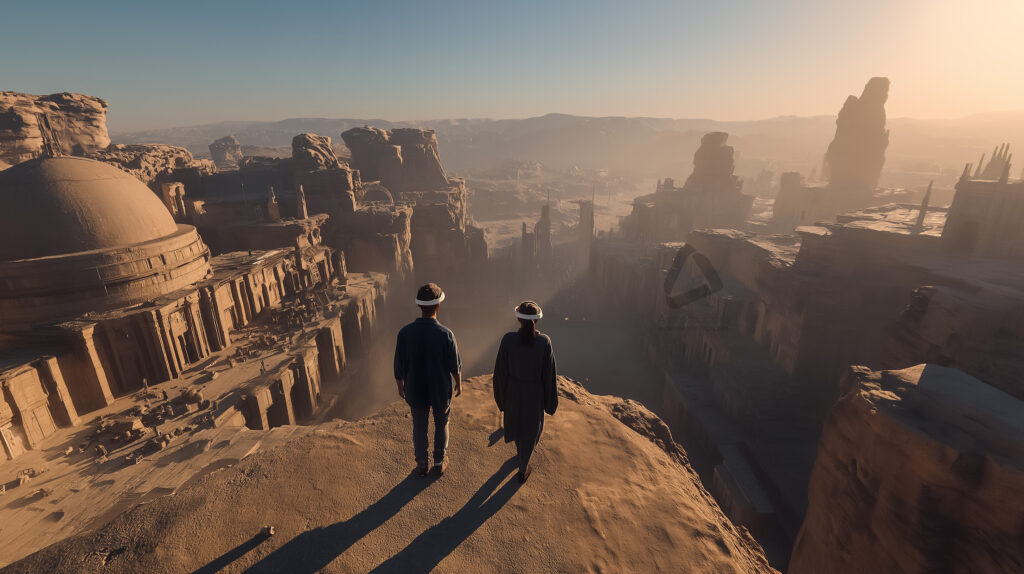
Here’s where things get really wild. By 2050, the line between “watching” a movie and “experiencing” it will practically disappear. VR films will let you wander through the story world, peek around corners, and maybe even influence what happens next. AR will bring cinematic elements into your living room—imagine characters appearing in your space, or story elements unfolding on your coffee table.
We’ll see holographic projections that don’t require special glasses, making 3D feel truly three-dimensional. Films will become personalized experiences, with AI tailoring aspects of the story to your preferences and viewing history. You might watch the same movie as your friend but have slightly different experiences based on what you’re interested in.
Interactive storytelling will take center stage. Want to see what happens if the hero makes a different choice? You’ll be able to explore alternate storylines, switch between character perspectives, and make the story your own.

A More Open Playing Field
One of the most exciting changes is how accessible filmmaking will become. Right now, you need serious money and connections to make a professional-looking film. By 2050, powerful AI tools, cloud-based workflows, and affordable virtual production tech will put that power in anyone’s hands.
Independent creators will be able to produce movies that look and feel like studio productions. Crowdfunding will evolve beyond simple donation campaigns—filmmakers will build communities around their projects, getting feedback and financial support directly from future audiences.
The big studios won’t disappear, but they’ll change. They’ll focus on global distribution, creating content for diverse international audiences. Blockchain technology will make copyright and royalty payments transparent and automatic, ensuring creators actually get paid for their work. Streaming platforms will offer more than just on-demand viewing—they’ll provide interactive, personalized experiences with pricing that adapts to demand and individual viewer profiles.

What We’ll Be Watching
The stories themselves will change too. We’re already seeing a push for more diverse voices and perspectives, and by 2050, that’ll be the norm. Films from underrepresented cultures and communities will have major platforms, telling stories that reflect the full spectrum of human experience.
Genres will blend in fascinating ways—imagine a romantic comedy that’s also a sci-fi thriller, or a documentary that lets you interact with historical events through AR. The environmental themes we’re seeing today will become central to many stories, and the industry itself will prioritize sustainable production methods.
Movie theaters won’t die—they’ll evolve. Think luxury venues with cutting-edge tech, offering experiences you can’t get at home. They’ll coexist with VR screenings and traditional streaming, giving audiences choices about how they want to experience stories.

The Human Touch Still Matters
Here’s the thing that won’t change: the heart of filmmaking is human. AI can generate footage, virtual sets can create stunning backdrops, but the soul of a great film—the emotion, the truth, the connection with audiences—that comes from people.
Directors, writers, actors, and cinematographers aren’t being replaced. They’re being empowered. Technology will handle the grunt work, freeing creative minds to focus on what they do best: telling stories that move us, challenge us, and help us understand ourselves and each other better.
Looking Ahead
As we move toward 2050, filmmaking will become more collaborative, more accessible, and more immersive than ever before. The barriers that kept talented creators out of the industry will crumble. Stories will become interactive experiences tailored to each viewer. Technology and human creativity will work hand in hand to create something neither could achieve alone.
The magic of cinema won’t fade—it’ll transform into something even more powerful. We’re heading toward an era where anyone with a story to tell can tell it, where audiences don’t just watch but participate, and where the only limit is imagination. That’s a future worth getting excited about.