
Remember when we thought flip phones were the peak of cool? Well, the smartphones we’re glued to today might soon feel just as outdated. By 2050, there’s a good chance we won’t be carrying phones at all. Instead, we’ll be wearing our technology—literally. Lets check the future of smartphones 2050.
Why Our Phones Are on Borrowed Time
Let’s be honest: smartphones are amazing, but they’re also kind of awkward. We’re constantly hunched over, staring at screens. We panic when we drop them. And how many times have you been at dinner with someone who’s more interested in their phone than the conversation? These everyday frustrations are pushing tech companies to think differently about how we connect with the digital world.
Sure, we’ve seen some wild concepts—holographic displays, transparent phones, devices that change shape. They look incredible in concept videos, but they’re really just fancy versions of what we already have. The real revolution isn’t about making better phones. It’s about moving beyond phones entirely.
Even Elon Musk has weighed in on this, predicting that brain-computer interfaces will eventually make phones obsolete. “In the future, there will be no phones, just Neuralinks,” he’s said. That might sound like science fiction, but it’s closer than you think.

Smart Glasses: Already Happening
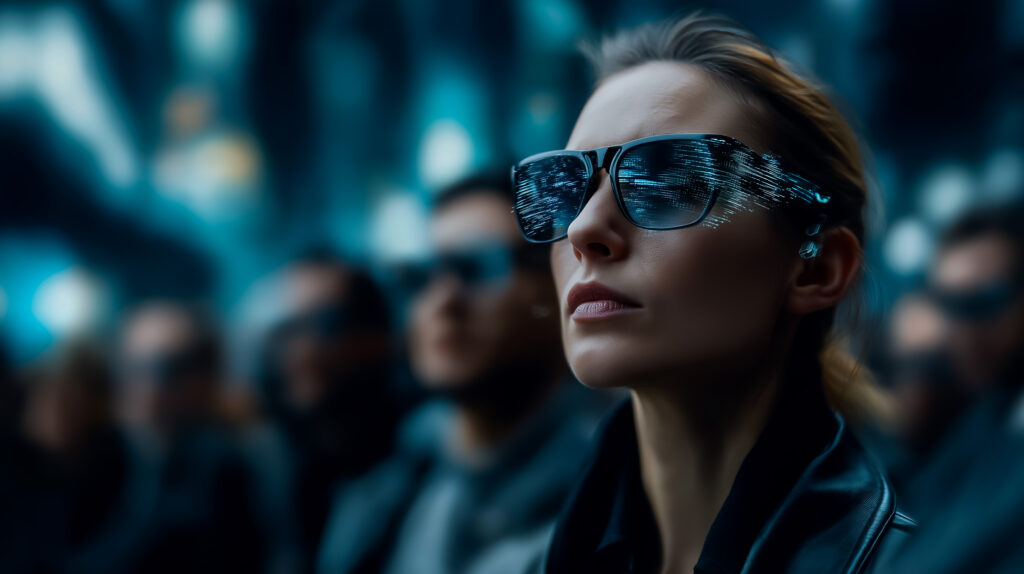
Here’s something that might surprise you: smart glasses are already taking off. In 2025, sales more than doubled—growing by about 110%. Companies like Google, Qualcomm, and Xreal aren’t just experimenting anymore; they’re building real products that people actually want to use.
Think about what makes smart glasses so appealing. You don’t need to pull anything out of your pocket. Your hands stay free. Information just appears in your field of vision when you need it—directions while you’re walking, translations when you’re traveling, notifications without having to break eye contact with the person you’re talking to. It feels less like using technology and more like having a superpower.
The technology is still evolving, sure. Early versions were clunky and screamed “I’m wearing tech!” But the newer models? They’re getting lighter, sleeker, and honestly, pretty stylish. Give it another few years, and you won’t be able to tell them apart from regular glasses.
Contact Lenses That Do Everything
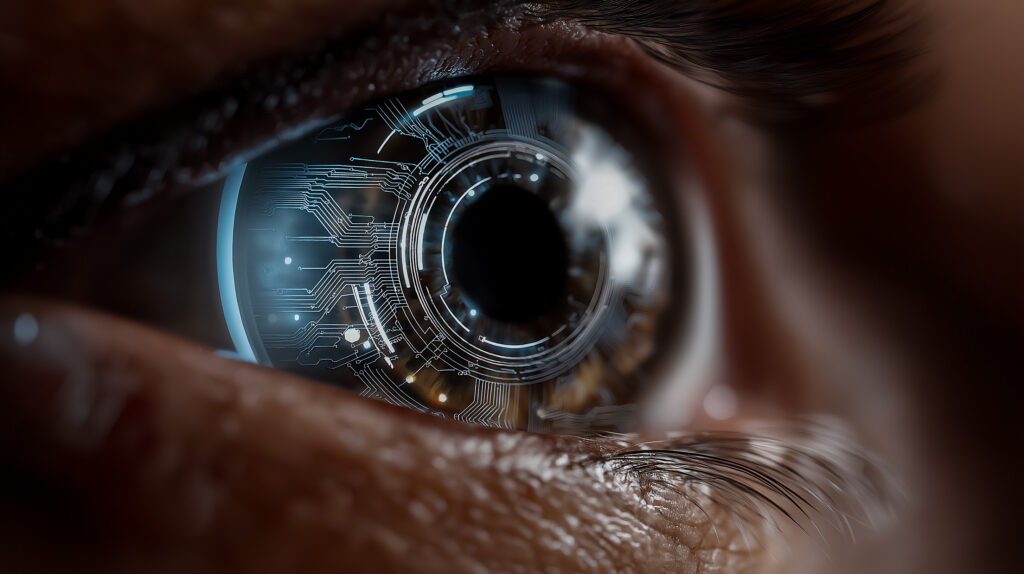
If smart glasses sound futuristic, augmented reality contact lenses are straight out of a sci-fi movie. Imagine tiny computers sitting right on your eyeball, with microscopic displays, processors, and sensors all packed into something no bigger than a regular contact lens.
The beauty of AR contacts is that they’re completely invisible. No one knows you’re wearing them. They give you your full field of vision—including peripheral sight—without any frames getting in the way. And for people with visual impairments, this technology could be life-changing, offering real-time help with identifying objects, recognizing faces, or navigating unfamiliar places.
Your Future Health Monitor
But here’s where things get really interesting: these devices won’t just show you information. They’ll also monitor your health. Smart contact lenses could analyze your tears (yes, your tears!) to detect early signs of diabetes, heart problems, or neurological conditions. Instead of waiting until you feel sick to see a doctor, your contacts could warn you about potential issues before symptoms even appear.
This shifts everything from “treating illness” to “preventing illness.” Your eyes become your personal health assistant.

Brain-Computer Interfaces: The Final Frontier
Now, let’s talk about the really wild stuff. By 2050, we might be using brain-computer interfaces—technology that connects directly to your neural system. Imagine browsing the internet with your thoughts. Sending a message without typing or speaking. Accessing any information instantly, like having Wikipedia downloaded straight into your brain.
It sounds intense, and it is. This technology would essentially expand your memory and cognitive abilities, blurring the line between human intelligence and artificial intelligence. We’re talking about fundamentally changing what it means to be human.
The Roadblocks We’re Working Through
Of course, we’re not there yet. AR contact lenses face huge technical challenges—mainly power, processing, and just making everything small enough. But nanotechnology is advancing rapidly, and what seems impossible today often becomes routine within a decade or two.
Smart glasses have already solved most of their early problems. As 5G networks expand and 6G eventually arrives, the connectivity these devices need will be everywhere.
The Privacy Question
Here’s the uncomfortable part: if everyone’s wearing cameras and sensors on their faces or eyes, what happens to privacy? Right now, you can usually tell when someone’s recording you with their phone. But with smart glasses or contacts? Not so much.
We’re going to need serious conversations about consent, data security, and surveillance. What happens when AI can identify everyone you see? When companies know everywhere you look and everything that catches your attention? And with brain-computer interfaces, we’re talking about potentially accessing people’s thoughts. That’s a level of privacy invasion we’ve never had to deal with before.
Society will need new rules, new laws, and new ethical frameworks to handle these technologies responsibly. The tech is racing ahead, but our social and legal systems are still playing catch-up.
Better for the Planet?
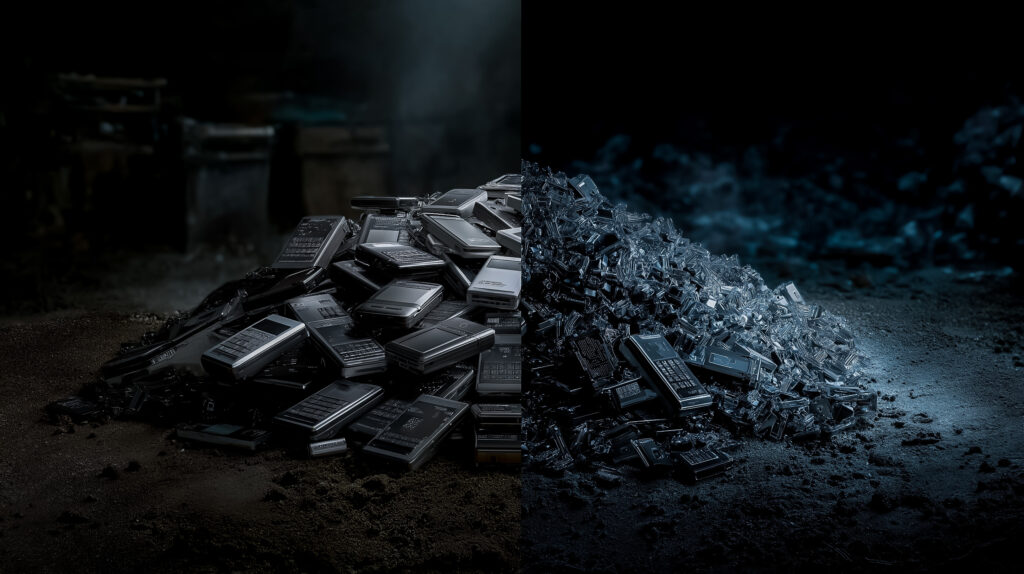
On a brighter note, this shift could actually be good for the environment. Wearable tech could last longer than smartphones, which we typically replace every few years. Modular designs mean you could upgrade parts instead of throwing away the whole device. And if we’re not manufacturing billions of smartphones anymore, that’s a lot less mining for rare earth metals and a lot less electronic waste piling up in landfills.
When Will This Actually Happen?
So what’s the timeline? Here’s a realistic guess:
Smart glasses will probably hit mainstream adoption somewhere between 2027 and 2030. They’re already good enough; they just need to get cheaper and more fashionable.
AR contact lenses might become available for specific uses by 2035-2040. Think professional applications first—surgeons, engineers, military—before they become something everyone can buy at the store.
Brain-computer interfaces are the furthest out, likely reaching consumers around 2045-2050. They’re also the most controversial and will require the most testing and regulation before widespread use.
What This Means for Us
By 2050, today’s smartphones will probably be museum pieces—relics of a time when we still carried our technology separately from our bodies. Our kids or grandkids will look at them the way we look at rotary phones now.
The devices that replace them won’t just be tools we use; they’ll be extensions of ourselves, so seamlessly integrated into our lives that we barely notice them. Whether that future excites you or terrifies you probably depends on how you feel about technology becoming more personal, more intimate, and more permanent.
One thing’s certain: the way we connect with information, with each other, and with the world around us is about to change in ways we’re only beginning to imagine. The smartphone era is ending. What comes next will be far stranger, far more powerful, and far more integrated into who we are as human beings.